Published: 18.08.2022

· There has been a so-called dispute over the rule of law between Poland and the European Commission since 2017.
· In recent weeks, the European Commission has published another edition of the "Report on the rule of law", in which it repeats the accusations against Poland and makes recommendations aimed at improving the state of the rule of law.
· They include, among others actions that may limit the use of the citizens' legislative initiative.
· The Ordo Iuris Institute, in response to the Report, prepared a study which shows that there is no legal definition of the rule of law and that the actions taken by the Commission may violate national competences.
The EC report covers a very wide range of topics - from the judiciary to broadly understood civil society and media concessions. Most of the objections are formulated very generally, based on unmeasurable or biased criteria. The Commission also addressed a number of recommendations to Poland, which, in its opinion, were to improve the rule of law in our country. One of them is "improvement of the conditions of operation for civil society", by which the European Commission understands - as it may seem in the light of the document - restriction of the possibility of exercising the right to civic legislative initiative contrary to Polish regulations. These conditions are to take into account "European standards for civil society.
The commission also accused Poland of allegedly promoting a project of a citizens' legislative initiative "targeting LGBTIQ persons". In fact, no such project was promoted by the Polish authorities. Only the project aimed at limiting the possibility of promoting activities questioning family values, mainly by the LGBT movement, was allowed to proceed. It is a normal procedure, resulting from the fact that the project promoters meet all formal conditions.
The Ordo Iuris analysis indicated the lack of a legal definition of "the rule of law" among the values specified in Art. 2 of the Treaty on European Union. In fact, this undermines the entire mechanism and all procedures related to the protection of the rule of law that the European Union has undertaken and is still undertaking. The institute also noted that the Commission selectively approaches the problem of violations of the rule of law by member states. For example, it tolerates the fact that in Germany important functions in the judiciary are performed by politicians from the ruling party, which is impossible in Poland.
Ordo Iuris also points out that the European Commission does not have the competence to act to protect the rule of law by actually imposing specific systemic, administrative and legal solutions on a given state. In the absence of a uniform definition of the rule of law, the diversity of the member states, also in terms of political culture, is of great importance. This is influenced, among others, by different historical experiences or different institutional background.
"Considering the steps taken so far by the European Union, the jurisprudence of the Court of Justice of the European Union, as well as the proceedings pending by the Polish Constitutional Tribunal, the key to ending the ongoing dispute and maintaining the Community character of the European Union seems to be not only the development by the Member States of a consensual definition of the rule of law that would be included primary law of the EU, but above all a return to respect for the principles underlying the EU - equality, democracy, unity in diversity, including cultural and legal diversity, ”emphasized Anna Kubacka, an analyst at the Ordo Iuris Center for International Law.

• The Polish Constitutional Tribunal ruled on June 10 that the EU Directive establishing the European Emissions Trading System (ETS) is incompatible with the Polish Constitution, as it was adopted beyond the powers granted to the European Union by Poland.

16.06.2025
Shortly after the end of the second round of Polish presidential elections, which took place on 1 June 2025, the International Observation Mission of the Organisation for Security and Cooperation in Europe (OSCE) issued a Statement of Preliminary Findings and Conclusions concerning the elections.
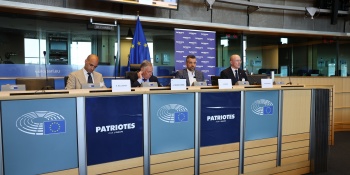
Wednesday's presentation in Brussels of the European Union reform plan developed by Poland’s Ordo Iuris Institute and Hungary’s Mathias Corvinus Collegium garnered significant interest. Nearly a hundred MEPs and their staff from many countries came to the presentation of this proposal.

10.06.2025
According to the authors of the report published today, titled “Violations of the Principles of a Democratic State of Law and the Rule of Law by the Government Donald Tusk after December 13, 2023,” the authorities, under the leadership of Polish PM Donal


© 2016 ORDO IURIS - Instytut Na Rzecz Kultury Prawnej


