Published: 29.03.2021

The World Health Organization published a report on the problem of intimate violence against women globally. The WHO report, published on International Women’s Day, presents data according to which the model of combating violence based on the gender concept assumptions and pushed through, inter alia, by the Istanbul Convention, is ineffective. It turns out that the States which have not implemented the model, including Poland, have lower rates of violence against women than countries whose policies are founded on the philosophical assumptions of the Istanbul Convention.
This is the next edition of the report published since 2013. However, unlike the report from 8 years ago, which included data from 60 countries, this year’s edition covers data from 154 countries (concerning intimate partner violence experienced by women during their lifetime) and data from 159 countries (concerning violence experienced by women during the pandemic itself). Importantly, the broad-scale studies conducted by the WHO suggest that in the CEE region, including Poland, the problem of violence against women is much below the average. The report shows that in CEE region only 20% of women have experienced intimate partner violence, while the global average for women aged 15-49 who suffer from intimate violence is one-third.
The report also highlighted the problem of young age of victims of intimate partner violence – girls and women aged 14-24 constituted 24% of victims. This may be the effect of permissive sexuality education adopted in many countries. Its consequences are devastating, and in practice it encourages early sexual initiation leading to instrumental treatment of girls and women.
The WHO report is another document that shows the counter-effectiveness of the model of combating violence against women based on gender ideology. According to the model, the source of violence is not personal or social pathologies of all sorts, but rather the very fact of physical, psychological and cultural differences between the sexes. The WHO report is another proof that the concept of combating violence against women proposed in the Istanbul Convention is erroneous. According to a study conducted in 2016 by the EU Agency for Fundamental Rights, Poland – despite lagging behind in terms of gender equality indicators seen through the prism of the gender ideology – is in fact the country with the lowest percentage of women who have experienced violence (19%) in the EU. By comparison, in countries that have adopted and apply the ‘gender’ model of combating violence, the numbers are much higher: in Denmark, 52% of women have experienced violence, in Finland – 47% and in Sweden – 46%.
Another major threat resulting from erroneous and purely ideological assumptions of the model of combating violence proposed by the Istanbul Convention is the very definition of violence – incorrect and imprecise – which undermines the integrity of the family as the optimum environment for an individual to develop and one that offers the most effective protection from violence. This fact is confirmed by research conducted in Poland and Hungary – the two countries in the region with a much lower rate of violence against women than the global average. It shows that what protects against violence, alcoholism or drug addiction – that is, the real factors generating violence – are strong family bonds. The weaker those bonds, the higher the risk of intimate partner pathology that causes women to suffer.
“The WHO report is further proof confirming the fact that the assumptions of the gender concept are erroneous and that the model of combating violence based on those assumptions is evidently ineffective”, emphasises Katarzyna Gęsiak – Deputy Director of the Ordo Iuris International Law Centre.

24.06.2025
• The Regional Court in Świdnica, Poland, issued a ruling restoring in official documents the biological sex of a woman who had undergone a so-called transition and, after facing its consequences, decided to return to her true sex.

29.05.2025
• Proceedings in the case of the German Mori family have concluded at the District Court in Gdańsk.

23.05.2025
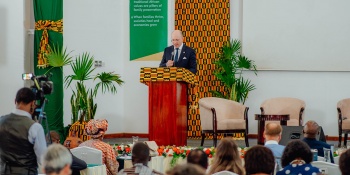
• The Ordo Iuris Institute co-organized the 2nd Pan-African Conference on Family Values in Nairobi and was invited to take part in the Kenyan government’s celebration of International Day of Families.
14.05.2025
• In Nairobi, the 2nd Pan-African Conference on Family Values is taking place with the participation of representatives from Ordo Iuris.


© 2016 ORDO IURIS - Instytut Na Rzecz Kultury Prawnej


